Label Material Types: A Complete Guide to Choosing the Right Label
 By Steve Leary
6 min read
By Steve Leary
6 min read

When a label peels, fades, smears, or refuses to stick, it usually comes down to a mismatch between the material and the conditions it's working in. Choosing the wrong label costs you time and money.
If you want to get it right, you have to understand the facestock, adhesive, liner, and finish that make up any label and match each one to the product, surface, and environment.
American Business Forms & Envelopes helps businesses across 23 industries get labels built for demanding daily operations. This guide breaks down the most common label material types and how to choose the right one before you order.
Table of Contents
What Are Label Material Types?
Label material types refer to the combination of facestock, adhesive, liner, and finish that makes up a label. Each layer affects how the label looks, how it applies, and how long it lasts.
Facestock
It is the visible top layer, which can be paper, film, foil, or synthetic, that you print on. It defines the durability, print quality, and surface compatibility.
Adhesive
It is the coating on the back that bonds the label to a surface. It determines permanence, temperature tolerance, and whether removal is possible.
Liner
Liner is the backing that protects the adhesive until application. It also affects how labels are processed by automated dispensing equipment.
Finish
A finish is the surface treatment, gloss, matte, laminate, or coating that affects appearance, moisture resistance, and writability.
Common Label Material Types and Best Uses
According to Label and Narrow Web, citing AWA Alexander Watson Associates, the global label market is approximately 52% paper versus 48% film, with nearly 70% of North American pressure-sensitive label applications produced on paper substrates. Here's how the most common materials break down.
Paper Labels
Paper labels are cost-effective for indoor, dry applications such as packaging, shipping, and organization. They are not suitable for moisture, heat, or outdoor exposure.
BOPP Labels
BOPP film labels resist moisture and condensation, making them a practical choice for refrigerated packaging, water bottles, and humid environments.
Vinyl Labels
Vinyl labels are waterproof and durable for outdoor use, handling UV exposure and temperature fluctuations smoothly. HVAC labels and equipment identification often use vinyl for its long service life.
Polyester Labels
Polyester (PET) labels resist chemicals, abrasion, and high temperatures, making them the right choice for industrial, laboratory, and solvent-exposed applications.
Foil and Metallic Labels
Foil and metallic labels use a reflective facestock for high visual impact. They are best suited for premium branding and packaging where appearance matters.
Tag Stock
Heavier, uncoated card or paper material designed for writing on and physical handling, and used for service tags, hang tags, and identification cards.
Adhesive Types for Labels
The adhesive does as much work as the facestock. Match it to the surface texture, temperature range, and whether removal will ever be needed.
- Permanent Adhesive: Bonds tightly and is not designed to be removed. Right for product identification, equipment tags, and anything that needs to stay in place for the label's full life.
- Removable Adhesive: Holds in place but allows for clean removal without residue. It is suited for price tags, temporary signage, and inventory applications.
- Repositionable Adhesive: Allows the label to be lifted and reapplied without damage. It is useful where positioning needs adjustment before a final commitment.
- Freezer Adhesive: Formulated to bond and hold in refrigerated and frozen conditions where standard adhesives lose tack and peel.
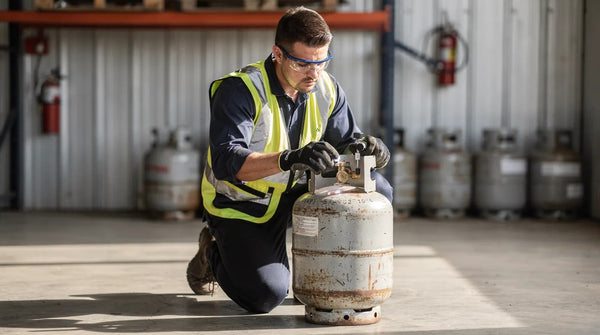
- Specialty Adhesive: Covers high-temperature surfaces, textured metals, and chemical exposure. Propane labels and fuel labels typically require specialty adhesives that withstand oil, UV, and outdoor conditions.
Label Finish and Coating Options

Finish affects print clarity, moisture resistance, and whether a label survives handling and exposure. Choose based on how the label will be used.
- Gloss Finish: Vivid color and polished appearance, which is well suited for product branding and packaging.
- Matte Finish: Reduces glare and improves readability in direct light and is practical for text-heavy service and compliance labels.
- Satin Finish: A middle ground between gloss and matte. It offers decent color with reduced glare for labels that need both print quality and readability.
- Laminate: A protective film layer that significantly increases resistance to moisture, abrasion, chemicals, and UV fading.
- Varnish: A liquid coating applied during printing that adds gloss or matte protection at a lower cost than full lamination.
- Writable Coatings: Allow pen or marker notes after application. It is required for service and inventory labels where field staff record information on-site.
Factors That Affect Label Material Selection
Before choosing a material, answer these questions about how and where the label will be used.
|
Factor |
What to Consider |
|
Application Surface |
Rough or curved surfaces need higher-tack or specialty adhesives. |
|
Indoor or Outdoor |
Outdoor use requires film, vinyl, or polyester with UV resistance. |
|
Moisture Exposure |
Any moisture contact rules out standard paper. Use BOPP, vinyl, or polyester. |
|
Temperature Changes |
Freezer use needs freezer-grade adhesive and film facestock. High heat needs polyester. |
|
Handling and Abrasion |
Labels that get wiped or rubbed need laminate protection or a durable facestock. |
|
Brand Presentation |
High-visibility branding may call for gloss or foil. Service labels prioritize readability. |
|
Budget and Quantity |
Paper costs less per unit. Specialty materials cost more but reduce failures and replacements. |
How to Choose the Right Label Material
Start with the application, not the material. Working from the use case outward is the fastest way to narrow the field.
Define the Label Use
Identify what the label needs to do: identify a product, mark equipment, carry compliance information, or serve as a service record.
Match the Environment
Determine whether the label will be exposed to moisture, temperature extremes, chemicals, UV, or abrasion. Each factor narrows material options quickly.
Choose the Adhesive
Match the adhesive to the surface and temperature range. Adhesive choice is the most common cause of early label failure.
Select the Finish
Choose gloss for visual impact, matte for readability, or laminate where protection from handling matters.
Test Before Ordering
Order samples before committing to a full run. Real-world testing on the actual surface catches material mismatches before they become costly.
Label Material Types to Avoid for Certain Uses
Knowing what not to use prevents the most common label failures.
Paper in Wet Conditions
Standard paper labels absorb moisture and peel. Condensation, water contact, or outdoor humidity requires film or synthetic facestock.
Weak Adhesive on Rough Surfaces
Low-tack adhesives don't bond reliably to rough, textured, or contaminated surfaces, causing labels to lift and fall off quickly.
Uncoated Labels Outdoors
Uncoated paper breaks down quickly under UV light, rain, and temperature changes. Outdoor use needs UV-resistant material and, at a minimum, a varnish coating.
Low-Durability Labels for Handling
Labels on items that are stacked, wiped, or cleaned repeatedly need a protective coating or durable facestock to withstand contact.
Making the Right Label Material Choice
The right label stays where you put it, stays readable, and holds up through whatever the application requires.
American Business Forms & Envelopes prints business forms and labels for service businesses in 23 industries. For durable service labels, equipment identification, or custom-printed labels for daily operations, ABFE has the materials and experience to get it right. Call 1-800-519-3691 or visit amerbusforms.com to discuss your application.
FAQ About Label Material Types
What is the most durable label material?
Polyester and vinyl are the most durable options for demanding applications. Polyester handles chemicals, abrasion, and high temperatures. Vinyl handles outdoor UV, moisture, and physical wear. Both outlast paper and standard film labels in tough conditions.
Are paper labels waterproof?
No. Standard paper labels are not waterproof. Moisture causes paper facestock to bubble and peel. For any application involving water or condensation, use BOPP, vinyl, or polyester instead.
What is BOPP used for?
BOPP is used for labels that require moisture resistance and a clean print surface, commonly found on refrigerated food packaging, water bottles, and personal care products.
Which label material is best for bottles?
BOPP and clear vinyl are the most common choices. Both conform to curved surfaces, resist moisture, and hold up during handling.
Can I write on all types of labels?
No. Gloss film resists standard pen and marker ink. Writing requires a matte or satin finish or a writable coating. Specify a writable or matte finish when ordering if field notes are needed after application.


Free · Mailed to you
Get a free catalog & print samplesSee the paper, colors and print quality before you order. Tell us your industry and we'll mail them to you. Free, no obligation.